
Course Description
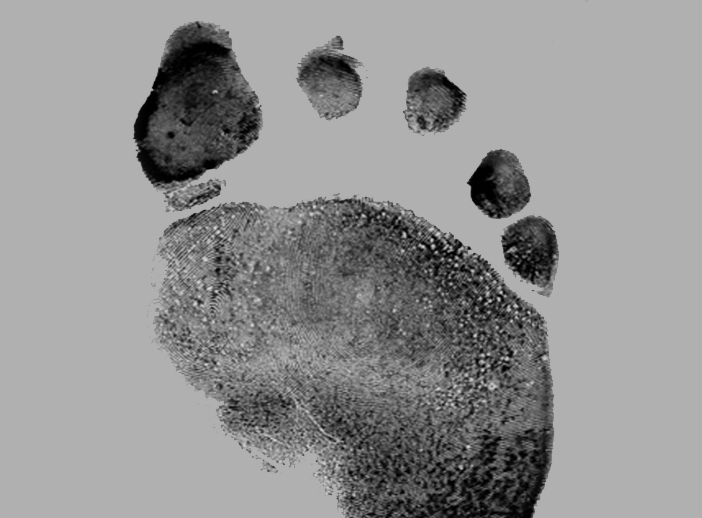
Due to their infrequent submission to forensic laboratories, friction ridge impressions from the foot/sole (plantar) recovered at the scene of a crime can challenge even the most tenured comparison analyst. Additionally, it is likely that if you have never received formal training specific to analyzing and comparing plantar impressions, you may have misinterpreted a plantar impression as coming from a palm print or a finger! Even if the interpretation, analysis, and comparison are not problematic, what are the subsequent legal aspects?
This 16-hour course is designed to provide the participant with the biological fundamentals, legal admissibility scenarios, and most importantly: a tangible, practical comparison experience with plantar friction ridge impressions.
Numerous practical exercises, supplemented by lectures and discussions, are among the techniques used to provide attendees with a tangible comparison experience of plantar impressions. The attendee will leave the course with valuable experience and an increased knowledge of associated philosophies and procedures.
Additionally, this course fulfills OSAC’s proposed Standard for Friction Ridge Examination Training Program Friction Ridge Skin Identification Training Manual (completing the general requirements within the three segments of Section 4.4.4. Foot Prints).
The objective of this course is to provide each participant with a deeper understanding of friction ridge science, with an emphasis on locating, analyzing, searching, comparing, and evaluating latent fingerprints. Phalange, crease, scar, and palm print analysis and comparison will also be discussed.
Target Audience
This course is designed for the intermediate-level examiner/analyst; it is not an introductory course. Examiners/analysts with some experience will benefit from both the course content and the many practical exercises. Attendees without prior comparison experience, or at a very basic level of experience, should probably have that level of training and experience before participating in this course. Students with active experience ranging from 6 months to 20+ years have attended this course and benefited from the varied difficulty levels of the exercises available to participants.

Course Logistics
Prerequisites
Attendees without prior comparison experience or who are currently at a basic level should complete that level of training before participating in this course. Students will be expected to participate in the daily performance of intermediate-level comparisons, including, but not limited to, offering opinions, answering questions directed at them, and taking a position on an issue. Students are in a training environment and, as such, will be encouraged to explore new concepts, procedures, and ideas.
Should be Able to Perform
Upon successful completion of this course, the student will be able to:
- Understand and utilize the attributes of Ridge Flow in plantar impressions
- Understand and utilize the attributes of Pattern Elements of plantar impressions
- Understand and utilize the attributes of Irregular Creases within plantar impressions
- Understand and utilize the attributes of Minutiae in plantar impressions
- Understand the differences (and similarities) of ridge flow characteristics between plantar, palmar, and fingerprint impressions
- Understand and utilize the OSAC identification process of plantar impressions
- Understand and demonstrate key aspects of the analysis process (recognition/distinction of plantar impression, substrate, matrix, etc.)
- Conduct basic, intermediate, and advanced comparisons of plantar friction ridge impressions
- Document conclusions of an analyzed latent plantar impression
- Understand basic problems and practices in comparing plantar impressions
- Understand the past legal admissibility and the present legal components of plantar impressions.
Course Schedule
| DAY 1 | |
|---|---|
| 8:00 AM – 9:00 AM | Intro – Pre-source Determination exercise |
| 9:00 AM – 10:00 AM | OSAC Sec. 4.4.4 overview |
| 10:00 AM – 11:30 AM | Intro & Overview of Plantar Impressions |
| 11:30 AM – 12:30 PM | Lunch |
| 12:30 PM – 1:00 PM | Tracing Exercise |
| 1:00 PM – 2:00 PM | Association Exercise |
| 2:00 PM – 3:00 PM | Concentration Exercise |
| 3:00 PM – 4:00 PM | Comparison Exercises |
| 4:00 PM – 5:00 PM | Plantar case video |
| DAY 2 | |
|---|---|
| 8:00 AM – 9:00 AM | Plantar Discrimination lecture & exercise |
| 9:00 AM – 10:00 AM | Plantar case video |
| 10:00 AM – 11:30 AM | Comparison Exercises |
| 11:30 AM – 12:30 PM | Lunch |
| 12:30 PM – 1:00 PM | Source Determination Exercise |
| 1:00 PM – 2:00 PM | Comparison Exercises |
| 2:00 PM – 3:00 PM | Gurney Kidnap presentation |
| 3:00 PM – 4:00 PM | Comparison Exercises |
| 4:00 PM – 5:00 PM | OSAC Sec 4.4.4 Assessment |
Must Bring to Class
- There will be numerous 1:1 comparison exercises conducted throughout this course; therefore, comparison magnifiers are required.
- Ridge counters are encouraged, but optional.
- Colored highlighters and a portable lamp/light should be considered.
- Dress is business casual, as this course will be conducted in a professional environment and facility.
Recommended Reading
- Cummin & Midlo, Fingerprints, Palms and Soles, Chapter 6-So/es, Dover Publications, 1943, pp 120-140.
- Moenssens, A., Fingerprints and the Law, Chilton Book Company, 1969, pp 60-62, 136-143, 207.
- Wiley Encyclopedia of Forensic Science, Friction Ridge Skin: Morphogenesis and Overview, Wiley & Sons, LTD. 2009.
- Champod, Christophe et al. Fingerprints and Other Ridge Skin Impressions (2nd Edition). Chapters 1 and 2. Appendices A and B. CRC Press, Boca Raton, 2016
Training Certification and Recertification Credits
Comparison of Plantar Friction Ridge Impressions may qualify for specific continuing education training credits. Use's summary below as a quick reference for organization and discipline specific applicability. The approving organization has final authority and their website should be referenced before submitting any request for training credits.
International Association for Identification (I.A.I.) Latent Print Certification Board Approved for 16 Certification Credits
International Association for Identification (I.A.I.) Latent Print Certification Board Approved for 16 Re-Certification Credits