Course Description
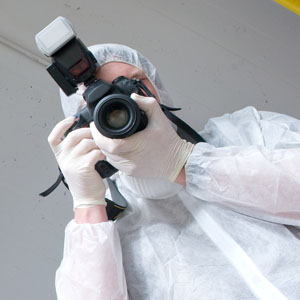
This 3-day hands-on course is designed for crime scene investigators, police officers, evidence technicians, and other personnel responsible for properly documenting crime scenes and physical evidence through photography. The students will gain a thorough understanding of how cameras function, adjustments for various lighting conditions, proper exposure and composition, and what photos to take, thereby improving their skills as photographers. Students with limited familiarity with photography, as well as those who have some experience taking photos but want to improve their skills and better understand why and how to adjust camera settings, will benefit. Attendees will be able to take the camera out of automatic settings and improve images needed for investigations and court proceedings.
Target Audience
This 3-day hands-on course is designed for crime scene investigators, police officers, evidence technicians, and other personnel responsible for properly documenting crime scenes and physical evidence through photography. The students will gain a thorough understanding of how cameras function, adjustments for various lighting conditions, proper exposure and composition, and what photos to take, thereby improving their skills as photographers.
Course Logistics
Should be Able to Perform
Upon completion of the course, attendees will be able to:
- Identify when evidence photography is needed and which photos to take.
- Identify and list what photographic equipment is necessary for evidence photography.
- Identify and adjust various controls on the camera and flash.
- Describe proper archiving and documentation of photographic evidence.
- Describe and demonstrate evidence comparison, photography, and the use of scales.
- Demonstrate proper adjustments of ISO, shutter speed, aperture, and exposure.
- Identify and adjust image quality and file sizes needed for evidence photography
- Demonstrate various flash techniques and describe when to use them.
- Demonstrate proper procedures for photographing footwear, tires, and impression evidence.
- Demonstrate use of the light meter to obtain proper exposure.
- Explain how camera settings affect exposure and composure.
- Problem solve when ideal lighting conditions don’t exist.
Course Schedule
| Duration | Day 1 | Day 2 | Day 3 |
|---|---|---|---|
| 1 Hour | Introductions / Course Overview | ISO Settings | Painting with Light |
| 1 Hour | Introduction to Crime Scene Photography | Light Meter - Usage | Scales and Scene Markers |
| 1 Hour | Camera Controls and Basic Mechanics | Histograms / Shooting Data / White Balance | Field of View / Composure / Rule of 3 |
| 1 Hour | Camera Controls Continued | Introduction to Flash Photography | Accident Scenes / Injury Photos |
| 1 Hour | Lunch | Lunch | Lunch |
| 1 Hour | Lens Functions / Digital Media | 2 & 3 Dimensional Footwear and Tire Impression Photography | Archiving Images / Tips and Tricks |
| 1 Hour | Image Quality and Size / Exposure Compensation | "Bluestar" (luminol) Photography | |
| 1 Hour | Shutter Speed | Flash / Glare and Window Glass | Macro/Close Up / Morgue or Death Scenes |
| 1 Hour | Aperture (F-Stops) | Time Exposure | Surveillance / Closing Remarks |
Must Bring to Class
Students should wear appropriate business-casual clothing for practical exercises conducted both indoors and outdoors.
Students are asked to bring the following:
- Digital Camera (digital SLR preferred) and instruction manual
- Normal lens (if using an SLR), approximately 35-50mm, or a zoom lens capable of that range
- Macro lens, if available
- Batteries and charging cables for the camera and flash
- Digital media (2)
- Off-camera flash and instruction manual
- Remote flash cord to connect the flash to the camera
- Tripod (if available)
- Flashlight
These items are not required to attend class, but students are strongly encouraged to bring them in order to enhance their learning experience.
Course Objectives
Instruction includes:
- Fundamentals of photography
- Understanding of basic camera operations: (shutter speeds, aperture, white balance, exposure adjustments, ISO, etc)
- Automatic, program modes, and manual adjustments
- Suggested camera equipment
- Crime scene and evidence photographic documentation principles
- Scene safety issues
- Lens selection
- Flash techniques
- Digital vs. Film: Pros & Cons
- How digital works
- Digital media (formats)
- Archiving digital images
- Meter usage and calculation of proper exposure
- Two & three dimensional evidence photography (footwear & tire tracks)
- Some advanced techniques, including time exposure, painting with light, tips, and tricks for better photos.
- Hands-on exercises
Training Certification and Recertification Credits
Digital Crime Scene & Evidence Photography may qualify for specific continuing education training credits. Use's summary below as a quick reference for organization and discipline specific applicability. The approving organization has final authority and their website should be referenced before submitting any request for training credits.
International Association for Identification (I.A.I.) Crime Scene Certification Board Approved for 16 Certification Credits
International Association for Identification (I.A.I.) Forensic Photography and Imaging Certification Board Approved for 24 Certification Credits
International Association for Identification (I.A.I.) Crime Scene Certification Board Approved for 16 Re-Certification Credits
International Association for Identification (I.A.I.) Forensic Photography and Imaging Certification Board Approved for 24 Re-Certification Credits