
Course Description
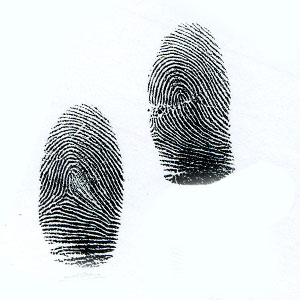
This course will first examine the pilot study on simultaneous impressions in light of the Supreme Judicial Court of Massachusetts's ruling that the application of ACE-V to such impressions does not satisfy a Daubert analysis. Topics to be discussed include study design, results, documentation, error rates, conclusions, and future considerations. The focus then shifts to an in-depth look at SWGFAST’s Standard for Simultaneous Impression Examination, which provides a structured means to address these types of impressions. Attendees will also create simultaneous impressions under the provided ground truth (known) conditions across different surfaces. These impressions will then be developed and examined by the attendees to better understand their appearance in light of the known deposition conditions. Finally, attendees will apply both the presented theory and their practical experience to examine numerous impressions (ground truth unknown) and conduct full written analyses, ideally demonstrating that their conclusions of simultaneity or non-simultaneity are supported by the physical evidence.
Target Audience
This advanced course is designed for examiners who want to learn more about the use of simultaneous impressions in the identification process. If your agency currently doesn’t report identifications based on simultaneity, then you may wish to attend. Research from both the United States and Europe will be presented along with the SWGFAST position on this important topic.

Course Logistics
Prerequisites
Attendees of this course should consider taking the Introduction to the Science of Friction Ridge Examination course first; it is not required.
Should be Able to Perform
At the completion of this course, the student should be better able to determine the simultaneity or non-simultaneity of impressions, with justification, on a variety of surfaces. Students should also have a more complete understanding of the many dynamics involved in the deposition process and how these dynamics affect the appearance of the resulting impressions.
Course Schedule
| Duration | Day 1 | Day 2 | Day 3 |
|---|---|---|---|
| 1 Hour | Registration / Course Overview / Introductions | SWGFAST simultaneous impression standard - analysis | Practical exercises - creating simultaneous impressions |
| 1 Hour | Review of the Patterson case | SWGFAST simultaneous impression standard - analysis | Practical exercises - creating non-simultaneous impressions |
| 1 Hour | Patterson oral argument video | Practical exercises - determining simultaneity | Examination of created impressions |
| 1 Hour | Presentation of pilot study research | Practical exercises - determining simultaneity | Comparison Exercise |
| 1 Hour | Lunch | Lunch | Lunch |
| 1 Hour | Presentation of pilot study research | SWGFAST simultaneous impression standard - comparison | Comparison Exercise |
| 1 Hour | Discussion of additional research | SWGFAST simultaneous impression standard - evaluation, verification | Course review |
| 1 Hour | Practical Exercises - determining simultaneity | SWGFAST simultaneous impression standard - reporting | Written examination |
| 1 Hour | Practical Exercises - determining simultaneity | Discussion of other research efforts | Discussion of exam / closing remarks |
Must Bring to Class
- Students should bring fingerprint magnifiers and ridge counters.
- Dress is business casual as the course will be conducted in a professional environment and facility.
Recommended Reading
- Black, J. P. Pilot Study: The Application of ACE-V to Simultaneous (Cluster) Impressions. Journal of Forensic Identification. 2006, 56 (6), 933 - 971.
- Standard for Simultaneous Impression Examination, 12/5/08, ver. 1.0, www.swgfast.org
- Ashbaugh, D.R. Quantitative-Qualitative Friction Ridge Analysis: An Introduction to Basic and Advanced Ridgeology; CRC Press: New York, 1999; pp 134-135. a
Training Certification and Recertification Credits
Examination of Simultaneous Impressions may qualify for specific continuing education training credits. Use's summary below as a quick reference for organization and discipline specific applicability. The approving organization has final authority and their website should be referenced before submitting any request for training credits.
International Association for Identification (I.A.I.) Latent Print Certification Board Approved for 24 Certification Credits
International Association for Identification (I.A.I.) Latent Print Certification Board Approved for 24 Re-Certification Credits