Course Description
The purpose of this four-day seminar is to enable the student:
- To identify the best technique, or series of techniques, for developing the maximum evidence.
- To understand and exploit fluorescence as a powerful detection strategy, using a range of Forensic Light Sources.
- To record impression evidence faithfully and accurately.
- To prepare and use the chemical reagents safely in a laboratory environment.
- The student will learn about lasers and light sources as key forensic technologies, as well as the principles behind luminescence detection of evidence.
- Techniques targeting tapes (adhesive side), blood prints on porous and nonporous surfaces will be featured.
- The student will learn how to use multiple techniques in the correct sequence on many surfaces for maximum results.
- The student will learn conventional, atypical, and digital photographic techniques for extracting the clearest and most useful images.
- This course will feature hands-on sessions in exhibit processing and photography, as well as an examination and certificate of completion.
Target Audience
Crime scene technicians, detectives, laboratory analysts, and others who process evidence in a laboratory environment, who want to understand and exploit fluorescence as a powerful detection strategy using chemical reagents and a range of Forensic Light Sources
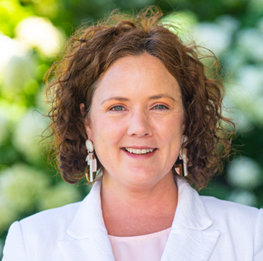
Alicia McCarthy
Ph.D., CFWE, CSCSA
Course Logistics
Duration: 4 days
Hours: 36
Tuition: $650.00
Should be Able to Perform
The student will learn:
- To understand and exploit fluorescence as a powerful detection strategy using a range of Forensic Light Sources.
- To record impression evidence faithfully and accurately.
- To prepare and use chemical reagents safely in a laboratory environment.
- To use multiple techniques in the correct sequence on many surfaces for maximum results.
- Conventional, atypical, and digital photographic techniques for extracting the clearest and most useful images.
Course Schedule
| Duration | Day 1 | Day 2 | Day 3 | Day 4 |
|---|---|---|---|---|
| 2 Hours | Opening Remarks / Evidence / Theory of Light and Fluorescence (Classroom) | Health and Safety (Classroom) / Lab Rotation (All Day) | Crime Scene DNA (Classroom) / Lab Rotation (All Day) | Impression Photography (Classroom) |
| 2 Hours | Chemical Treatments (Classroom) | Lab Rotation | Lab Rotation | Photographic Practical (Location) |
| 1 Hour | Lunch | Lunch | Lunch | Lunch |
| 2 Hours | Comparison of Light Sources (Classroom) | Lab Rotation | Lab Rotation | Photographic Practical (Location) |
| 2 Hours | Mock Crime Scenes (Location) / Digital Imaging (Classroom) | Lab Rotation | Lab Rotation | Review of Practical Assignments / Exam |
Must Bring to Class
- Students must bring lab coats or other protective garments and wear old clothing on lab days.
- No open-toed shoes can be worn in the laboratory.
- All students are strongly encouraged to bring a digital camera (digital SLR preferred) with a macro lens and tripod to enhance the learning experience during this class – it is not required for attendance but is strongly encouraged.
- All types of standard digital media should be able to be used by the instructor to critique the work
Recommended Reading
- Lee and Gaensslen’s Advances in Fingerprint Technology, Third Edition, CRC Press,2013, Edited by Robert Ramotowski
- Crime and Measurement: Methods in Forensic Investigation, Nafte, M., Dalrymple, B., Carolina Academic Press, 2011