
Course Description
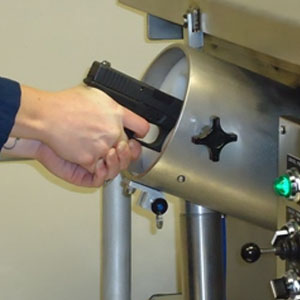
This course is designed to introduce the students to the safe handling of firearms. It will introduce the students to the preliminary examination and function testing of firearms. The course will also introduce the students to test firing, including selecting appropriate ammunition, indexing, sequencing, and marking samples. Different recovery methods will be introduced as well. The students will learn to properly document and package test-fired specimens. The students will learn to properly document the firearms by both note-taking and composing final reports.
Course Expectations
- Students are expected to demonstrate professional and courteous behavior during class. Students are expected to fully participate in all group work.
- Approximately 35 firearms were test-fired throughout the week, including shotguns, rifles, pistols, revolvers, and fully automatic firearms.
- Students are required to determine if the firearms were safe and operable.\
- Students must follow all directions and strictly adhere to all range safety rules.
- Failure to follow all firearms safety rules may result in the student being removed from class.
- Each student is expected to be present, on time, and to participate in each assignment.
- Class will run from 8 am to 5 pm Monday through Friday.
- Exams: There will be a written test (multiple choice and fill-in-the-blank)
- Practical: There will be a practical exercise consisting of various hands-on evaluations.
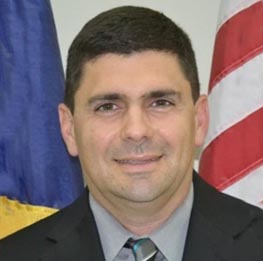
Jeff Goudeau
MS, AFTE-FA, CSCSA
Course Logistics
Duration: 5 days
Hours: 40
Tuition: $1,000.00
Should be Able to Perform
At the completion of this course, the students should be able to:
- Understand the steps in determining if a firearm is safe to fire.
- Understand how to select the proper ammunition to test-fire.
- Understand how to test fire and recover bullets and cartridge cases.
- Understand how to properly download large-caliber rounds for testing in the water tank.
- Understand how to determine trigger pull.
- Understand how measure firearms for barrel and overall length.
- Understand how to document and report firearms that are test-fired.
- Understand basic caliber interchangeability.
- Understand some basic machine gun conversion devices.
Course Schedule
| Duration | Day 1 | Day 2 | Day 3 | Day 4 | Day 5 |
|---|---|---|---|---|---|
| 1 Hour | Instructor Introduction and Class Expectations | Documentation and Test Fire into water tank | Documentation and Test Fire into water tank | Range Day – shotguns and rifles | Tech review fellow classmates notes and reports |
| 1 Hour | Test Fire Lecture | ||||
| 1 Hour | |||||
| 1 Hour | |||||
| 1 Hour | Lunch | Lunch | Lunch | Lunch | Lunch |
| 1 Hour | Documentation and Test Fire into water tank | Tech review fellow classmates notes and reports | |||
| 1 Hour | Test Review, Written Test, and Follow up | ||||
| 1 Hour | |||||
| 1 Hour |
Must Bring to Class
- Hearing Protection
- Eye Protection
- Clothes for Test Firing
Recommended Reading
- Conrad, W.E., “Firing Piston Ammunition in a Revolver”.
- SAAMI “Technical Data Sheet Unsafe Firearm-Ammunition Combinations”, 2019, pp. 1-14
- SAAMI “Generally Accepted Cartridge and Chamber Names”, 2021, pp. 1-4
- SAAMI “General Accepted Firearms and Ammunition Interchangeability”, 2021, pp. 1-3
- Wolslagel, P.F., “Accidental Discharge Potential of Lorcin, Bryco, and Related Pistols”, AFTE Journal, Vol 33, No. 1, Winter 2001, pp. 48-49
- Heard, B.J., “Handbook of Firearms and Ballistics: Examining and Interpreting Forensic Evidence” 2008, 2nd edition, Chapters 1.2 and 4.7, pp. 19-32 and 191-197
Course Objectives
At the completion of this course, the students should be able to:
- Understand the steps in determining if a firearm is safe to fire
- Understand how to select proper ammunition to test fire
- Understand how to test fire and recover bullets and cartridge cases
- Understand how to properly download large calibers to test fire in the water tank
- Understand how to determine trigger pull
- Understand how to measure firearms for barrel and overall length
- Understand how to document and report firearms that are test-fired
- Understand basic caliber interchangeability
- Understand some basic machine gun conversion devices