
Course Description
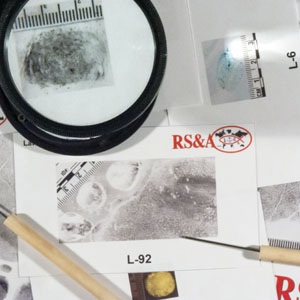
This 40-hour intermediate-level course is designed to assist forensic and biometric professionals who are currently comparing friction ridge evidence and feel they could enhance their skills and knowledge by participating in a formalized course. Numerous practical exercises, supplemented by lectures and discussions, are among the techniques used to enhance the students' understanding of the identification process. From determining useful target areas, to the friction ridge characteristics used to identify, each step of this course will enable the student to effectively analyze, search, compare, and evaluate developed friction ridge evidence.
The course focuses primarily on practical exercises that have been objectively assessed through LQMetrics. Each exercise is arranged in a sequential process to progressively challenge the student’s application of the identification process. In turn, this makes for a more efficient and accurate analyst. Additionally, this course supplements the proposed OSAC Standard for Friction Ridge Examination Training Program, specifically module sections 4.4.1, 4.4.2, 4.4.3, 4.4.4, and 4.8.
The objective of this course is to provide each participant with a greater understanding of friction ridge science, with an emphasis on locating, analyzing, searching, comparing, and evaluating latent fingerprints. Phalange, crease, scar, and palm print analysis and comparison will also be discussed.
Target Audience
This course is designed for the intermediate-level examiner/analyst; it is not designed as an introductory-level course. Examiners/analysts with some experience will benefit from both the course content and the many practical exercises. Attendees without any prior comparison experience or at a very basic level of comparison experience should probably satisfy that level of training and experience prior to participating in this course. Students with active experience levels ranging from 6 months to 20+ years have attended this course and benefited from the different difficulty levels of the exercises available to participants.

Course Logistics
Prerequisites
Examiners without prior comparison experience, or with only basic comparison experience, should complete that level of training prior to participating in this course. Students will be expected to participate in the daily performance of intermediate-level comparisons, including, but not limited to, offering opinions, answering questions directed at them, and taking a position on an issue. Students are in a training environment and, as such, will be encouraged to explore new concepts, procedures, and ideas.
Should be Able to Perform
Upon successful completion of this course, the student should be (better) able to:
- Understand and utilize feature selection (ridge flow, pattern elements, minutia, ridges, etc.) of friction ridge impressions.
- Understand and utilize feature attributes (components of features that can be measured and counted) in friction ridge impressions.
- Utilize the analysis process to determine the friction ridge impressions' value.
- Understand and demonstrate key aspects of the analysis process (substrate, matrix, pattern elements, etc.)
- Understand and utilize focal and target areas to assist in the identification process.
- Understand and utilize smart searching techniques to assist in the identification process.
- Conduct intermediate and possibly advanced-level comparisons of fingerprint, phalange, and palm impressions.
- Understand and associate observed creases in our fingers, phalanges, and palms.
- Document the conclusion of an analyzed and compared latent print impression.
- Understand basic problems and practices in comparing friction ridge impressions.
- Understand the fundamentals of our visual and cognitive processes.
Course Schedule
| DAY 1 | |
|---|---|
| 8:00 AM – 9:00 AM | Intro - initial exercises |
| 9:00 AM – 10:00 AM | Jon's "Commentary" |
| 10:00 AM – 11:00 AM | Analysis, Comparison, Evaluation, Verification & Scientific Method |
| 11:00 AM – 11:30 AM | Jon's "Philosophy" |
| 11:30 AM – 12:30 PM | Lunch |
| 12:30 PM – 1:00 PM | Photo Hunt exercises |
| 1:00 PM – 3:00 PM | Comparative Concentration |
| 3:00 PM – 5:00 PM | Alpha Comparison exercise |
| DAY 2 | |
|---|---|
| 8:00 AM – 9:00 AM | Comparison process overview |
| 9:00 AM – 11:30 AM | Alpha Comparison exercise |
| 11:30 AM – 12:30 PM | Lunch |
| 12:30 PM – 1:00 PM | Contemporary issue/video |
| 1:00 PM – 2:00 PM | Target/Focal area lecture |
| 2:00 PM – 3:00 PM | Target/Focal area exercises |
| 3:00 PM – 5:00 PM | Comparison exercise A |
| DAY 3 | |
|---|---|
| 8:00 AM – 10:00 AM | Comparison exercise A |
| 10:00 AM – 11:00 AM | Crease Association exercise |
| 11:00 AM – 11:30 AM | Searching Smart - lecture |
| 11:30 AM – 12:30 PM | Lunch |
| 12:30 PM – 1:00 PM | Contemporary issue/video |
| 1:00 PM – 3:00 PM | Arch, Loop, Whorl exercises |
| 3:00 PM – 4:00 PM | Comparison exercise B |
| 4:00 PM – 5:00 PM | Exclusions - lecture |
| DAY 4 | |
|---|---|
| 8:00 AM – 9:00 AM | Searching Smart - lecture |
| 9:00 AM – 10:00 AM | Phalange concentration |
| 10:00 AM – 11:00 AM | Phalange comparison |
| 11:00 AM – 11:30 AM | Visual Perception lecture |
| 11:30 AM – 12:30 PM | Lunch |
| 12:30 PM – 1:00 PM | Contemporary issue/video |
| 1:00 PM – 2:00 PM | Comparison exercise c |
| 2:00 PM – 3:00 PM | Gorillas in the Print - lecture |
| 3:00 PM – 4:00 PM | Visual/cognition - video |
| 4:00 PM – 5:00 PM | Friction Ridge Bingo! |
| DAY 5 | |
|---|---|
| 8:00 AM – 9:00 AM | Palm print Tracing exercise |
| 9:00 AM – 10:00 AM | Palm Print Association |
| 10:00 AM – 11:00 AM | Palm Print Concentration |
| 11:00 AM – 11:30 AM | Palm Print Comparison |
| 11:30 AM – 12:30 PM | Lunch |
| 12:30 PM – 1:00 PM | Visual process video |
| 1:00 PM – 2:00 PM | Plantar presentation |
| 2:00 PM – 3:00 PM | Plantar print Tracing exercise |
| 3:00 PM – 5:00 PM | Summary |
Must Bring to Class
- There will be numerous 1:1 comparison exercises conducted throughout this course; therefore, comparison magnifiers are required. Ridge counters are encouraged, but optional. Colored highlighters and a portable lamp/light should be considered.
- Dress is business casual as this course will be conducted in a professional environment and facility.
Recommended Reading
- Ashbaugh, David; Quantitative-Qualitative Friction Ridge Analysis, 1999.
- ------------ ; Palmar Flexion Crease Identification, J. For. Indent., 41 (4), 1991.
- ------------ ; The Premises of Friction Ridge Identification, J. For. Indent., 44 (5), 1994.
- Cowger, James F.; Friction Ridge Skin, Chapter 7, CRC Press, 1982.
- Olsen, Robert D.; Friction Ridge Characteristic and Points of Identity, JFI, 41(3), 195, 1991.
- OSAC, Standard for Feature Selection in Friction Ridge Examination, Version 2.0, August 2023.
- OSAC, Standard for Friction Ridge Examination Training Program, Version 1.0, December 2017.
- Smith, Ron; Demystifying Palm Prints Handbook.
- Vanderkolk, John; Forensic Individualization of Images Using Quality and Quantity of Information, JFI, 49 (3), 1999.
- Wertheim, Pat; Scientific Comparison and Identification of Fingerprint Evidence, Fingerprint Whorld, 26 (101), 2000.
- ------------- ; The Ability Equation, J. For. Indent., Vol. 46 (2), 1996.
- White, Alice; Features of the Friction Ridge Skin: Attributes, Diagnosticity, and Limitations, JFI, 2022 72(1) 33-127.
Training Certification and Recertification Credits
Friction Ridge Search and Comparison Techniques may qualify for specific continuing education training credits. Use's summary below as a quick reference for organization and discipline specific applicability. The approving organization has final authority and their website should be referenced before submitting any request for training credits.
International Association for Identification (I.A.I.) Latent Print Certification Board Approved for 40 Certification Credits
International Association for Identification (I.A.I.) Tenprint Certification Board Approved for 40 Certification Credits
International Association for Identification (I.A.I.) Latent Print Certification Board Approved for 40 Re-Certification Credits
International Association for Identification (I.A.I.) Tenprint Certification Board Approved for 40 Re-Certification Credits