
Course Description
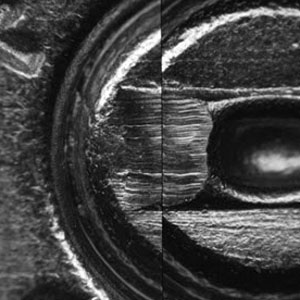
Course Description - This course is designed to introduce the students to the history of firearms identification, firearms, ammunition, and the Association of Firearm and Tool Mark Examiners Theory of Firearms and Tool Mark Identification, including the range of conclusions that can be reached in a forensic firearms examination. The course will cover the broad history of firearms, ammunition, and firearms identification. It will also cover concepts such as class characteristics, individual characteristics, subclass characteristics, sufficient agreement, known non-matches, identification, elimination, and inconclusive, to name a few.
Course Objectives
- Have an understanding of important historical events in the history of firearms and ammunition development
- Have an understanding of important historical events in the history of firearm identification
- Understand the basic terminology associated with the AFTE Theory of Identification
- Understand the basic terminology associated with the AFTE Range of Conclusion
- Understand and be able to explain class, individual, and subclass characteristics
- Understand the concept of sufficient agreement as it relates to tool marks
- Understand the difference between known matches and known non-matches
- Understand the AFTE Range of Conclusions
- Understand and be able to explain an identification between two or more tool marks
- Understand and be able to explain the elimination of two or more tool marks
- Understand and be able to explain an inconclusive result between two or more tool marks

Omar Felix
MS, AFTE-FA
Course Logistics
Duration: 5 days
Hours: 40
Tuition: $1,000.00
Course Expectations
- Each student is expected to be present, on time, and to participate in each assignment.
- Class will run from 8 am to 5 pm Monday through Friday.
- There will be a 50-question written test (multiple choice and fill-in-the-blank)
Recommended Reading
- “A Report on the AFTE Theory of Identification and Range of Conclusions for Tool Mark Identification and Resulting Approaches to Casework” AFTE Journal; 2002; Volume 34; Number 2; p.227 - 229.
- “Subclass Characteristics from Origin to Evaluation” AFTE Journal; 2018; Volume 50; Number 2; p.68.