
Course Description
One of the most useful types of evidence found at a crime scene is latent prints, which fingerprint examiners can search through powerful AFIS systems available today. The identification of these prints helps develop leads and possible suspects on many otherwise low-solvability crimes, like burglary. However, many of the lifted impressions that are submitted are determined not to be suitable for analysis, searching, or comparison, and they are returned to investigators as prints of “No Value” due to lost quality during the recovery process.
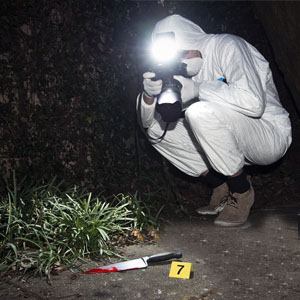
The opportunity to preserve or enhance the quality of these impressions is seriously compromised when photographs are not taken before lifting or processing the impressions further with other methods. Photographs taken by a well-trained CSI, evidence photographer, or investigator can retain the original quality while also documenting and authenticating their location. These high-quality photographs are critical and should be taken any time a print either can’t be easily lifted or when there is a chance that the recovery process could damage or not fully recover the print. Knowledge of photographic techniques and the ability to manually operate a camera without leaving it on automatic are mission-critical skill that often determines the quality of the impression examiners have to work with. These impressions and the surfaces that they are found on can be very difficult to photograph when the photographer lacks the knowledge and skills to make the adjustments that produce the best results. Latent print examiners often rely on high-quality photos rather than the actual lift to make a comparison or search a print through AFIS. Digital photography equipment also presents a series of new challenges due to continuous changes to the equipment itself.
Should be Able to Perform
Upon completion of this course, students should have a thorough understanding of how cameras function, adjustments for various lighting conditions, proper exposure and composition, and how to photograph latent impression evidence at the crime scene to produce many more prints of value for search and comparison.
Course Logistics
Course Schedule
| Duration | Day 1 | Day 2 | Day 3 |
|---|---|---|---|
| 1 Hour | Introductions / Course Overview | ISO Settings | Marco Photography and Creating Examination Quality Photos / Hands-on Latent Impression Photography Exercise |
| 3 Hours | Intro to Crime Scene Photography / Camera Controls and Basic Mechanics | Light Meter Usage / Histograms, Shooting Data, and White Balance / Introduction to Flash Photography | |
| 1 Hour | Lunch | Lunch | Lunch |
| 1 Hour | Lens Functions / Digital Media | Flash / Glare and Window Glass | Hands-on Latent Impression Photography Exercise |
| 1 Hour | Image Quality and Size / Exposure Compensation | Time Exposure / Painting with Light | |
| 1 Hour | Shutter Speeds | Scales and Scene Markers | |
| 1 Hour | Aperture (F-Stops) | Field of View / Composure / Rule of 3 | Final Review / Closing Remarks |
Must Bring to Class
Students should wear appropriate casual clothing for practical exercises conducted both inside and outdoors.
Students are asked to bring the following equipment to the first day of class:
- Digital camera (digital SLR preferred) and instruction manual
- Normal lens (if using an SLR), approximately 35-50mm, or a zoom lens capable of that range
- Macro lens, if available
- Batteries (or charger) for the camera and flash
- Digital media (2)
- Off-camera flash and instruction manual
- Remote flash cord (to connect flash to camera)
- Tripod
- Flashlight