
Course Description
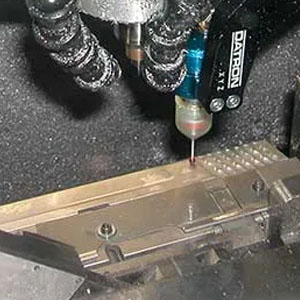
This course is designed to introduce the students to an overview of machining methods used in firearms manufacture as well as how those machining methods affect the creation of class, individual, and subclass characteristics. Students will learn how to evaluate tool working surfaces and toolmarks for class, individual, and subclass characteristics as well as articulating those evaluations.
Course Expectations
- Each student is expected to be present, on time, and to participate in each assignment.
- Class will run from 8 am to 5 pm Monday through Friday.
- Projects: Each student will give a five-minute presentation on a chosen machining method.
- Exams: There will be a 30-question written test (multiple choice and short answer)
- Practical: There will be a casting of barrels, breech faces, and firing pins exercise

Alexander Luby
BS
Course Logistics
Duration: 5 days
Hours: 40
Tuition: $1,000.00
Course Schedule
| Duration | Day 1 | Day 2 | Day 3 | Day 4 | Day 5 |
|---|---|---|---|---|---|
| 4 Hours | Review and Background: Theory of ID and Toolmarks | Machining Methods and Manufacture | Machine Shop Tour | Presentations | Review: Machining Methods and Manufacture |
| 1 Hour | Lunch | Lunch | Lunch | Lunch | Lunch |
| 4 Hours | Machining Methods/Class /Subclass/Individual | Casting | Evaluation of Tool Working Surfaces and Toolmarks | Presentations | Test |
Must Bring to Class
- Laptop and note-taking materials
- Dress is business casual.
Recommended Reading
- An Introduction to the Forensic Examination of Toolmarks, Miller, J. AFTE Journal, Vol. 33, No. 2, Summer 2001, pp. 233-235.
- Firearm and Toolmark Identification: The Scientific Reliability of the Forensic Science Discipline, Nichols, R. (2018), Chapters 2 and 3.
- Forensic Firearm Examination, Monturo, C. (2019), Chapters 5, 6, and 12.
- The Effect of Vibratory Finishing on Broaching Marks as a Function of Time, Winn, J. AFTE Journal, Vol. 45, No.4, Fall 2013, pp. 350-360.
Additional readings (Articles): Any additional readings selected will be provided during the week of class.
Course Objectives
At the completion of this course, the students should be able to:
- Understand the modern machining methods used in manufacturing modern firearms
- Understand and be able to explain the creation of class, individual, and subclass characteristics
- Cast various tool working surfaces
- Evaluate tool working surfaces for potential subclass characteristics
- Evaluate tool working surfaces for individual characteristics
- Identify potential manufacturing methods used on a tool working surface
- Evaluate toolmarks for potential subclass characteristics
- Understand and explain potential subclass characteristics on a tool working surface
- Understand and explain individual characteristics on a tool working surface
- Understand and explain potential subclass characteristics on a toolmark
- Understand and explain individual characteristics on a toolmark