Course Description
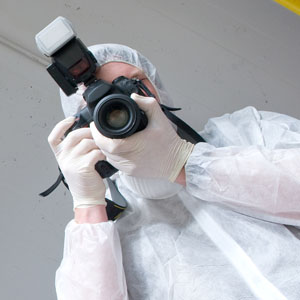
Are you comfortable knowing which photos should be taken at different types of crime scenes or serious accidents, how to use the “Rule of Three,” and why it should be used?
Do you understand why and when evidence markers or accurate scales are needed when photographing a crime scene or piece of evidence, and their correct placement?
Do you know how to use techniques such as “time photography” and “painting with light” to turn a dark nighttime crime scene into what appears to be a daylight scene, and how to apply them to other situations and evidence?
Do you know how to reduce or eliminate glare from the window and vehicle glass, display cabinets, video/TV monitors, cell phones, and even make the glass disappear in your photographs?
Do you know the proper techniques to photograph specific types of evidence, such as footwear and tire impressions, blood enhancement chemicals, including Bluestar, bullet path and strikes, and morgue evidence?
Are you currently good at performing close-up or Macro photography, and can you correct for lighting conditions, glare, depth-of-field issues, and clarity?
If you answered “No” to one or more of the above questions and, in general, would like to create better crime scene and evidence photographs, this course will help you.
Target Audience
This 3-day hands-on course is designed for crime scene investigators, police officers, evidence technicians, and other personnel responsible for properly documenting crime scenes and physical evidence through photography. The students will gain a thorough understanding of how cameras function, adjustments for various lighting conditions, proper exposure and composition, and what photos to take, thereby improving their skills as photographers.
Course Logistics
Prerequisites
In order to get the most out of this course, you should already understand the basic operations of a digital camera and flash.
This course will include a brief review of basic controls, including shooting modes, focus, exposure controls and compensation, lens/perspective distortion, white balance, and flash usage. NOTE: If you do not have a very good understanding of the basic camera controls/topics just listed, it is highly recommended that you take the course “Essential Camera Operations and Controls” before this course, or you could have difficulty understanding and proceeding through this more advanced course.
Should be Able to Perform
Upon completion of the course, attendees will be able to:
- Identify when evidence photography is needed and which photos to take.
- Identify and list what photographic equipment is necessary for evidence photography.
- Identify and adjust various controls on the camera and flash.
- Describe proper archiving and documentation of photographic evidence.
- Describe and demonstrate evidence comparison, photography, and the use of scales.
- Demonstrate proper adjustments of ISO, shutter speed, aperture, and exposure.
- Identify and adjust image quality and file sizes needed for evidence photography.
- Demonstrate various flash techniques and describe when to use them.
- Demonstrate proper procedures for footwear, tire, and impression evidence photography
- Demonstrate the use of the light meter to obtain proper exposure
- Explain how camera settings affect exposure and composure
- Problem solve when ideal lighting conditions don’t exist.
Must Bring to Class
Students should have access to the following items before starting the online course:
- Digital Camera (digital SLR preferred) and instruction manual
- Normal lens (if using an SLR), approximately 35-50mm, or a zoom lens capable of that range
- Macro lens, if available
- Batteries and charging cables for the camera and flash
- Digital media (2)
- Off-camera flash and instruction manual
- Remote flash cord to connect flash to camera - Tripod (if available)
- Flashlight
Course Expectations
Topics are covered in this course:
- General review of camera features and controls
- A critique of sample images and how to improve them
- Archiving and documentation procedures for images
- Equipment care and setup procedures
- Scene photography and composure (Rule of Three)
- Injury photography
- Time photography
- Painting with light
- Two and three-dimensional footwear/tire impression photographic techniques
- Glass and glare techniques
- Photographing chemical blood enhancement, including Bluestar
- Shooting scene evidence photography techniques
- Close-up and Macro photography techniques
- Tips and techniques for latent print photography
Training Certification and Recertification Credits
ONLINE - Crime Scene and Evidence Photography may qualify for specific continuing education training credits. Use's summary below as a quick reference for organization and discipline specific applicability. The approving organization has final authority and their website should be referenced before submitting any request for training credits.
International Association for Identification (I.A.I.) Latent Print Certification Board Approved for 12 Certification Credits
International Association for Identification (I.A.I.) Footwear and Tire Track Certification Board Approved for 36 Certification Credits
International Association for Identification (I.A.I.) Forensic Photography and Imaging Certification Board Approved for 36 Certification Credits
International Association for Identification (I.A.I.) Latent Print Certification Board Approved for 12 Re-Certification Credits
International Association for Identification (I.A.I.) Tenprint Certification Board Approved for 36 Re-Certification Credits
International Association for Identification (I.A.I.) Footwear and Tire Track Certification Board Approved for 36 Re-Certification Credits
International Association for Identification (I.A.I.) Crime Scene Certification Board Approved for 36 Re-Certification Credits
International Association for Identification (I.A.I.) Forensic Photography and Imaging Certification Board Approved for 36 Re-Certification Credits