
Course Description
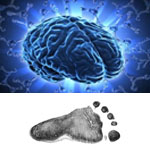
The course is designed to start with an examiner ability component covering visual ability, how vision works, color blindness, shades of gray, administrative component, variations in shapes, form blindness and memory. The students will then learn about ethics and bias, specifically how they relate to friction ridge skin examiners and the examination process. By understanding visual ability, ethics, bias, memory and mindset, the student will begin to see how all of these can play into the mind of the examiner before and during the examination. This course is specifically designed to reinforce to the student what goes on in the mind of an examiner prior to examination, during the examination, and at the moment of decision. The course concludes by covering skin diseases and conditions, intentional and unintentional mutilation, and friction ridge skin of the feet (plantar Impressions). Plantar impression topics will include anatomy, terminology, regions of the foot, orientation, and ridge flow to the feet.
Course Objectives
At the completion of this course, the students should be able to:
- Understand the visual abilities and the purpose for testing
- Understand the effects of human factors
- Understand the ethical obligations of a forensic scientist
- Understand the interrelationship between science and law
- Understand the types of bias to which a latent print examiner may be exposed
- Understand the potential consequences of ethics violations
- Understand the potential consequences of failure to recognize sources of bias
- Understand and ward against potential sources of bias
- Understand and ward against potential ethics violations
- Understand the proper procedures for reporting ethics violations
- Understand the difference between bias, ethics, and criminal behavior
- Understand their agency policies and procedures to reduce sources of bias and ethics violations
- Understand skin diseases and conditions associated with friction ridge skin
- Understand the difference between intentional and unintentional mutilation of friction ridge skin
- Understand the terminology associated the foot
- Understand the regions and ridge flow of the foot

Course Logistics
March 29, 2027 - April 2, 2027
8:00 AM to 5:00 PM
RSA Forensics Latent Print Academy
1524 MS-19
Meridian, MS 39307
40
$1,000.00
Local Contact
RSA Forensics
Matt Marvin, Academy Director
601-626-1100
info@rsaforensics.com
Course Schedule
| Duration | Day 1 | Day 2 | Day 3 | Day 4 | Day 5 |
|---|---|---|---|---|---|
| 1 Hour | Instructor Introduction and Class Expectations | Proper procedures for reporting ethics violations, consequences of failure to recognize ethical violations and policies to prevent ethics violations | Sources of Bias, failure to recognize Bias, Procedures to prevent Bias and errors caused by Bias | Intentional and Unintentional Mutilation of friction ridge skin | Footprint Comparison Exercise |
| 1 Hour | Vision, Visual Abilities, Form Blindness and Visual Acuity Testing | ||||
| 1 Hour | |||||
| 1 Hour | |||||
| 1 Hour | Lunch | Lunch | Lunch | Lunch | Lunch |
| 1 Hour | Introduction to Ethics | Introduction to Bias | Diseases of the Skin and Skin Conditions that affect friction ridge skin | Introduction to Friction Ridge Skin on Feet | Test Review |
| 1 Hour | Terminology associated with Footprints | Written Test and Follow up | |||
| 1 Hour | Regions and Ridge Flow of the Foot | ||||
| 1 Hour | Orientation of Footprints |
Recommended Reading
- The Ability Equation, Wertheim, P., Journal of Forensic Identification,
- Screening Potential Latent Fingerprint Examiner Trainees – The Viability of Form Blind Testing, Bertram, D., Carlon, P., Byrd, J., White, L., Journal of Forensic Identification, 60 (4), 460-476.
- Form Blindness, Byrd, J., Journal of Forensic Identification,
- Confirmation Bias, Ethics and Mistakes in Forensics, Byrd, J., Journal of Forensic Identification, 56 (4), 511-523.
- IAI Code of Ethics and Standards of Professional Conduct; IAI website.
- ASCLD/LAB Guiding Principles of Professional Responsibility for Crime Laboratories and Forensic Scientists; ASCLD/LAB website.
- Why experts make errors, Dror, I. E. & Charlton, D. (2006) Journal of Forensic Identification, 56 (4), 600-616
- Contextual information renders experts vulnerable to making erroneous identifications, Dror, I. E., Charlton, D., & Peron A. (2006) Forensic Science International, 156 (1), 74-78.
Helpful Lodging Information
Although we cannot endorse any particular hotel property, we have confirmed that the following lodging options are within a reasonable commuting distance to the training site.
Drury Inn & Suites Meridian
112 US-11
Meridian MS 39301