
Course Description
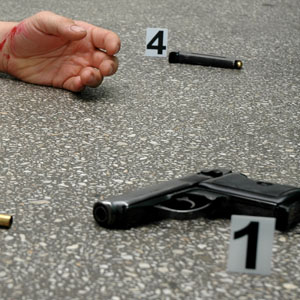
Crime is typically divided into two categories: crimes against property and crimes against persons. While the former is serious and may indeed constitute the majority of departmental caseloads, it is the latter that frequently results in serious bodily harm or death. Therefore, it is imperative that appropriate forensic and law enforcement personnel be able to successfully recognize, document, and/or interpret evidence found at these types of scenes. Furthermore, in a particular scene, it may be important to sequence a series of events to reconstruct how a crime may have occurred and the actions involved. This may allow the trained analyst/investigator to support or contradict statements offered by suspects, victims, and/or witnesses, thereby providing further insight into an investigation. This advanced course will present both the theory and practical application of several techniques essential to crime scene examination and the reconstruction of violent crimes. Practical exercises and case studies will be utilized to reinforce the material presented.
Target Audience
This course is designed for anyone who is tasked with investigating and processing violent crime scenes, particularly those crimes involving bloodshed. Although prior training and experience in bloodstain pattern analysis are beneficial, they are not required for participation in the course. Even if you will not be the person who interprets bloodstains or collects evidence, you should attend this course if you will be responsible for documenting these types of crime scenes.
Course Logistics
June 1, 2026 - June 3, 2026
Sandy City Police Department
Sandy City Police Department
Police Training Room
Sandy, UT 84070
24
$450.00
Local Contact
Sandy City Police Department
BL Smith, Training Coordinator
801-568-7240
blsmith@sandy.utah.gov
Should be Able to Perform
Upon successful completion of this course, the student should be (better) able to:
- Properly classify, document, and interpret bloodstain patterns
- Determine the sequence of events in a crime involving bloodshed
- Determine points of convergence and origin for reconstruction purposes
- Utilize the appropriate blood reagent(s) in the proper order, if necessary
- Properly document and interpret a shooting scene
- Determine, demonstrate, and document trajectories using the best method for a particular scene
- Utilize basic methods for shooting scene reconstruction
Course Schedule
| Duration | Day 1 | Day 2 | Day 3 |
|---|---|---|---|
| 1 Hour | Bloodstain Pattern Analysis Lecture | Bloodstain Mock Scene Exercise | Shooting Reconstruction Exercises |
| 1 Hour | |||
| 1 Hour | Practical Exercises | ||
| 1 Hour | Case Studies | ||
| 1 Hour | Lunch | Lunch | Lunch |
| 1 Hour | Case Studies | Discussion of Mock Scenes | Discussion of Practical Exercises |
| 1 Hour | Documentation Considerations | Shooting Reconstruction Lecture | Painting with Light |
| 1 Hour | Blood Reagents | Alternate Light Source Examination | |
| 1 Hour | Practical Exercise - Blood Reagents | Officer-involved Shootings |
Must Bring to Class
Practical exercises will be conducted both inside and outside. Students are advised to bring clothing suitable for possible soiling and inclement weather.
Students should bring:
- Camera (digital preferred)
- Lenses
- Off-camera flash with remote cord
- Instruction manuals for their specific camera and flash
- Batteries
- Digital media
- Tripod
- Flashlight
Course Objectives
- Bloodstain Pattern Analysis
- Stain recognition
- Documentation of bloodstain patterns
- Angle of impact determination
- Reconstruction methods
- Chemical development/enhancement techniques
- Specialized Photography
- Macro photography
- Painting with light
- Shooting Reconstruction
- Examination of bullet defects
- Direction of travel
- Demonstration of trajectory Shot sequencing
- Special issues in officer-involved shootings
- Alternate light source examination
Training Certification and Recertification Credits
Forensic Examination of Violent Crime Scenes may qualify for specific continuing education training credits. Use's summary below as a quick reference for organization and discipline specific applicability. The approving organization has final authority and their website should be referenced before submitting any request for training credits.
International Association for Identification (I.A.I.) Crime Scene Certification Board Approved for 24 Certification Credits
International Association for Identification (I.A.I.) Crime Scene Certification Board Approved for 24 Re-Certification Credits
Helpful Lodging Information
Although we cannot endorse any particular hotel property, we have confirmed that the following lodging options are within a reasonable commuting distance to the training site.
Hilton Garden Inn Salt Lake City/Sandy
277 West Sego Lily Drive
Sandy UT 84070
801-352-9400
Residence Inn - Sandy
270 West 10000 South
Sandy UT 84070
801-561-5005