
Course Description
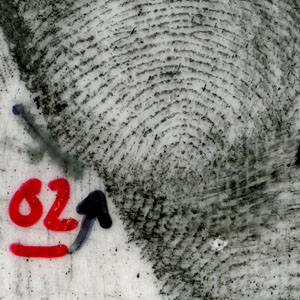
This course introduces students to distorted latent print impressions and provides hands-on opportunities to analyze them in detail. Students will learn to identify the types of placement or movement that may have affected an impression. Through lecture and practice, they will develop a stronger ability to describe distortion using newly introduced terminology. By applying this vocabulary and recognizing key indicators, students will be better equipped to explain the variations observed in distorted latent prints.
Target Audience
While the advantages for those who compare friction ridge impressions are clear, this material is equally valuable for those involved in evidence recovery. For example, understanding that ridge flow can be disrupted—even from a single contact—may encourage collecting an impression in its entirety rather than in fragments. Recognizing which area of skin likely produced an impression can also help technicians focus on specific regions when obtaining exemplar prints or assist in reconstructing events at a scene. Ultimately, anyone involved in the documentation, collection, or examination of friction ridge impressions will benefit from this course.

Course Logistics
March 22, 2027 - March 26, 2027
N/A
Intersect Business Complex
17872 Gillette
Room 120
Irvine, CA 92614
40
$650.00
Local Contact
Newport Beach Police Department
Tracy McKenzie, Training Manager/Sergeant
949-644-3667
tmckenzie@nbpd.org
Must Bring to Class
Participants should come prepared with materials that support both note-taking and practical exercises. Presentation material will be provided in hard-copy format (3-slides per page) or digital format, whichever is preferred.
All images for practical exercises will be provided in digital/electronic format. These images will be made available once the class roster is finalized and must be downloaded onto a laptop prior to the start of class. Each laptop must have digital imaging software (e.g., Photoshop) for tracing/marking images and comparing them to the provided known prints. A laptop can be shared by two attendees if necessary.
Recommended Reading
Participants are encouraged to review foundational and contemporary literature related to friction ridge examination and distortion prior to attending the course. Recommended reading includes current standards, technical reports, and peer-reviewed articles that address feature interpretation, comparison methodology, and distortion effects.
Key resources include publications from organizations such as the Scientific Working Group on Friction Ridge Analysis, Study and Technology (SWGFAST) and the Organization of Scientific Area Committees for Forensic Science (OSAC), as well as relevant guidelines issued by the International Association for Identification (IAI).
Additionally, articles and studies focusing on distortion, deposition factors, and biological changes in friction ridge skin will reinforce course concepts and provide useful context to the workshop material.\
- RSA Searching Smart Cards – rsaforensics.com
- RSA Palm Prints Searching Smart Book – rsaforensics.com
Course Objectives
This 4 ½ day workshop is designed for both examiners who compare friction ridge impressions and technicians responsible for processing and recovering them. The following is a daily outline of
- Day 1 introduces updated feature terminology and explains the rationale behind these new terms.
- Day 2 reinforces this vocabulary by reviewing characteristic feature sets across different regions of friction ridge skin, including distal phalanges, lower phalanges, palms, and feet. This day also incorporates pattern distribution data and reinforcement through practical comparison exercises.
*Days 3 through 5 focus on distortion, emphasizing how it can produce variations in patterns, ridge flow, and minutiae within impressions from the same source.
- Day 3 examines biological changes in the skin, discusses theories on traditional understandings of the “permanence” of friction ridge skin, and highlights the importance of contemporaneous exemplar prints under certain conditions, as well as fundamental contact distortion factors such as deposition pressure, angle of contact, hand flexion, and digit abduction/adduction. All concepts will be reinforced through practical exercises.
- Day 4 builds on this foundation by exploring intermediate distortion factors, including shearing stress, torque, and lift-and-shift movements, before advancing to more complex distortions such as double taps, overlays, and wobble. All concepts will be reinforced through practical exercises.
- Day 5 is a half-day session that concentrates on distortion caused by residue on the skin and surface conditions. These factors often present the greatest interpretive challenges, as they can produce tonal variations throughout an impression. The course concludes by addressing issues related to the capture of exemplar prints, ensuring examiners are better prepared to manage these complications.
Helpful Lodging Information
Although we cannot endorse any particular hotel property, we have confirmed that the following lodging options are within a reasonable commuting distance to the training site.
Hilton Irvine/Orange County Airport
18800 MacArthur Blvd.
Irvine CA 92612
949-833-9999